Stamped concrete and rubber resurfacing can both make an old pool area look intentional again. The more important question is how each surface feels and performs once it is hot, wet, and used every day. That is where the stamped concrete vs rubber pool deck decision becomes clearer.
Stamped concrete is a rigid cement surface with a decorative pattern. A rubber pool deck is a flexible, hand-troweled EPDM rubber and poly resin layer installed over suitable existing concrete. Both have a place, but they solve different poolside problems.
If your priority is a decorative poured-concrete look, stamped concrete may appeal. If your priority is cooler bare feet, wet-area traction, and keeping a sound slab in place, rubber resurfacing is usually the more practical pool-deck system.
Why a Pool Deck Needs More Than a Decorative Finish
Around a pool, the surface has to do more than look good from the patio door. It needs to handle direct Arkansas sun, splash-out, sunscreen, patio furniture, and fast bare-foot traffic around the steps.
That exposes the difference between a hard patterned slab and a flexible textured finish. Stamped concrete begins as concrete, so it behaves like concrete: it is rigid, it holds heat, and it needs control joints because it will crack as it moves. The stamped pattern can make the deck look more finished, but it does not change those underlying traits.
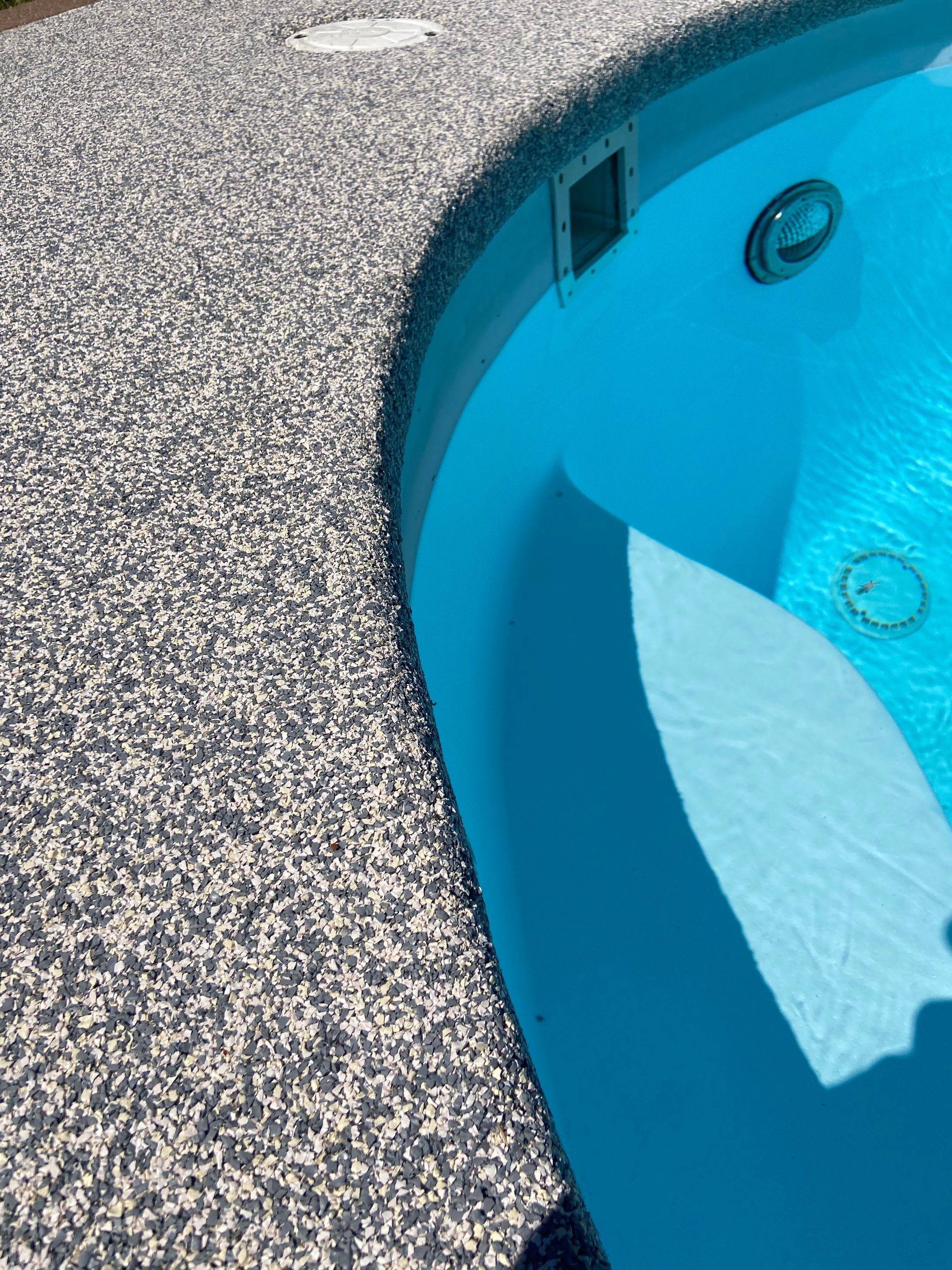
A rubber surface changes the walking layer without asking you to replace a slab that is still structurally useful. The EPDM rubber and poly resin system is hand-troweled over prepared concrete and heat-rolled for bond and texture. It is designed around comfort, traction, and flex instead of a stamped pattern.
Stamped Concrete vs Rubber Pool Deck: The Real Differences
The table below compares the features homeowners notice after the project is finished, not just on the first day.
| Factor | Stamped Concrete | Rubber Pool Deck (Fox) |
|---|---|---|
| Typical installed range | $12-$18 / sq ft | Quoted after an on-site assessment |
| Base material | Rigid poured or cement-overlay surface | Hand-troweled EPDM rubber + poly resin |
| Existing slab | Often requires a new pour or rigid overlay | Keeps suitable existing concrete in place |
| Heat under bare feet | Retains concrete's heat in direct sun | Cooler than concrete in the same sun |
| Wet-foot traction | Depends on pattern and sealer condition | Slip-resistant texture built into the finish |
| Cracks and joints | Control joints and slab movement can show through | Covers many cosmetic cracks on stable slabs |
| Ongoing upkeep | Resealing helps preserve appearance | Routine rinsing and normal cleaning |
| Best fit | Homeowners pursuing a stamped-cement look | Homeowners improving an existing pool deck's comfort and traction |
The price range is useful context, but it should not decide the job by itself. A stamped-concrete project can grow quickly when an old deck needs demolition, new concrete, curing time, or detailed pattern work. Rubber resurfacing also depends on the slab condition and the scope around steps, coping, and transitions, which is why Fox prices it after seeing the deck.
See what your pool deck could look like - get a free, no-pressure quote.
What Stamped Concrete Does Well and Where It Falls Short
Stamped concrete can be a good choice for a homeowner starting from scratch and committed to a decorative stone, wood, or tile-like pattern. It creates a consistent poured look with fewer loose pieces than pavers.
But a pool deck is a demanding environment for a rigid cement finish. Water does not stop the slab from expanding and contracting. Over time, the same movement that affects plain concrete can reappear at control joints or cracks. A sealer can improve color and appearance, but it can also change how the surface feels when wet and needs maintenance to keep the stamped finish looking fresh.
Heat is the other concern. Stamp patterns do not change concrete's basic tendency to absorb and hold sun. On a Little Rock or Conway afternoon, a patterned deck can still be tough on bare feet. That may be acceptable when the visual style is the main goal, but it is not the strongest answer to a hot, slick pool deck.
Why Rubber Resurfacing Fits a Working Pool Deck
Fox's rubber system is not trying to imitate stamped concrete. It is built for the way families actually use the space.
- Comfort: The rubber finish runs cooler than concrete in direct sun. It is not cool at all times, and it still warms in sunlight, but the underfoot difference is real.
- Traction: The slip-resistant texture is part of the surface itself, which matters around wet entries and splash zones.
- Preservation: We can cover many cosmetic cracks, stains, and areas of spalling without demolishing a stable slab.
- Flexibility: Rubber handles normal temperature changes differently from a rigid cement overlay.
- A cleaner project: When the concrete qualifies, the original deck stays in place and many installations are completed in a day.
That makes rubber resurfacing especially useful for aging pool decks in Little Rock, North Little Rock, Conway, Benton, and the rest of Central Arkansas. The first step is always a fit check. If the slab is sinking, heaving, or moving structurally, a new surface should not be used to hide it.
Why Fox for a Rubber Pool Deck
Fox is licensed and insured in Arkansas, and pool decks are our primary outdoor-concrete service. We start with the condition of your existing deck, explain whether resurfacing is responsible, and install the same hand-troweled, heat-rolled EPDM rubber system that is designed for outdoor use.
Every qualifying new installation includes a 12-year written warranty and is built to last 15+ years in normal residential use. The finish also gives you a broad set of design directions without locking you into a stamped pattern. Explore the available color options and the other outdoor surfaces we handle in our services section.
For another practical pool-deck comparison, read our rubber pool deck vs. epoxy guide. The right material depends on the slab and the way you want the space to work, not just the first photo you see online.
Quick FAQ
Is stamped concrete slippery around a pool?
It can be, especially when water and sealer are involved. Pattern depth, finish, cleaning, and sealer condition all affect traction. A rubber pool deck is designed with a slip-resistant texture for wet-foot use.
Is a rubber pool deck cooler than stamped concrete?
Yes. Because stamped concrete is still a cement surface, it retains heat much like plain concrete. Rubber resurfacing runs cooler than concrete in the same sun, although every outdoor surface warms in direct sunlight.
Can rubber resurfacing go over stamped concrete?
Often, yes, when the existing stamped slab is stable and suitable for resurfacing. Fox evaluates the concrete first, including cracking, movement, and drainage, before recommending a surface.
Which lasts longer around a pool?
Both require a sound base and proper installation. Stamped concrete remains a rigid surface that can show slab movement. Fox's flexible rubber system is built to last 15+ years in normal residential use and includes a 12-year written warranty on qualifying installations.
For another Central Arkansas perspective, compare Best Pool Deck Surface for Arkansas Summers with Concrete Coating vs Pavers vs Stamped Concrete: What Lasts before choosing the surface approach that fits your property.
Free Estimate
Ready to resurface your pool deck?
See what a cooler-underfoot, slip-resistant pool deck could look like at your home.
Get 15% off or 12 months no interest*. Fall offer ends 12/19/26.
Get Your Free Pool Deck Quote →Free, no-pressure, and we'll call you within 5 minutes.