If you are looking for a slip-resistant pool deck surface, you are probably dealing with the same thing many Arkansas homeowners notice every summer: wet feet, smooth concrete, and a deck that suddenly feels less safe than it should.
That problem usually gets worse over time. Old broom-finished concrete wears down. Painted surfaces get slick. Some coatings look clean at first, then become the kind of surface that makes you slow down every time kids start running around the pool.
The good news is that you do not have to settle for a deck that feels risky, harsh under bare feet, or too hot by the middle of the day. The right resurfacing system can improve traction, cover worn concrete, and make the whole pool area more comfortable to use.
Why Pool Decks Get Slippery in the First Place
Most slippery pool decks do not start that way. They get there gradually.
Water is the obvious factor, but it is not the only one. Arkansas pool decks also deal with sunscreen, splash-out, algae in shaded spots, worn-down texture, and years of traffic. Even a deck that felt fine when it was poured can become slick once the original texture fades away.
Here are the most common reasons a pool deck starts losing grip:
- The concrete texture wears smooth. Bare feet, patio furniture, and cleaning slowly flatten the original finish.
- A paint or thin coating was added later. Many low-cost surface fixes were never meant for outdoor pool traffic.
- Mildew or algae builds up. Shaded edges and damp corners can stay slick even after a rinse.
- The deck was built for looks, not traction. Some surfaces prioritize appearance and ignore how the space actually gets used.
That is why the best slip-resistant pool deck surface is about how it behaves when the deck is wet, hot, and in constant use.
What Makes a Slip-Resistant Pool Deck Surface Work
A true slip-resistant pool deck surface needs more than a rough feel. Around a pool, it has to balance traction, comfort, and durability at the same time.
The safest surfaces usually have a few things in common:
- Grip built into the texture itself. Not a film that can wear off quickly.
- Comfort under bare feet. Good traction should not mean a harsh, abrasive surface.
- Performance in full sun. A safer deck still needs to feel usable in Arkansas heat.
- Coverage over existing wear. If the slab is still sound, resurfacing should fix the top layer without forcing a full tear-out.
Homeowners usually compare a few different routes here. Plain concrete can be broom-finished, but it still gets hot and the texture can wear down. Paint and epoxy are usually too slick or too fragile for an outdoor pool area. Cement-based toppings may improve the look, but they are still rigid and can crack back through over time.
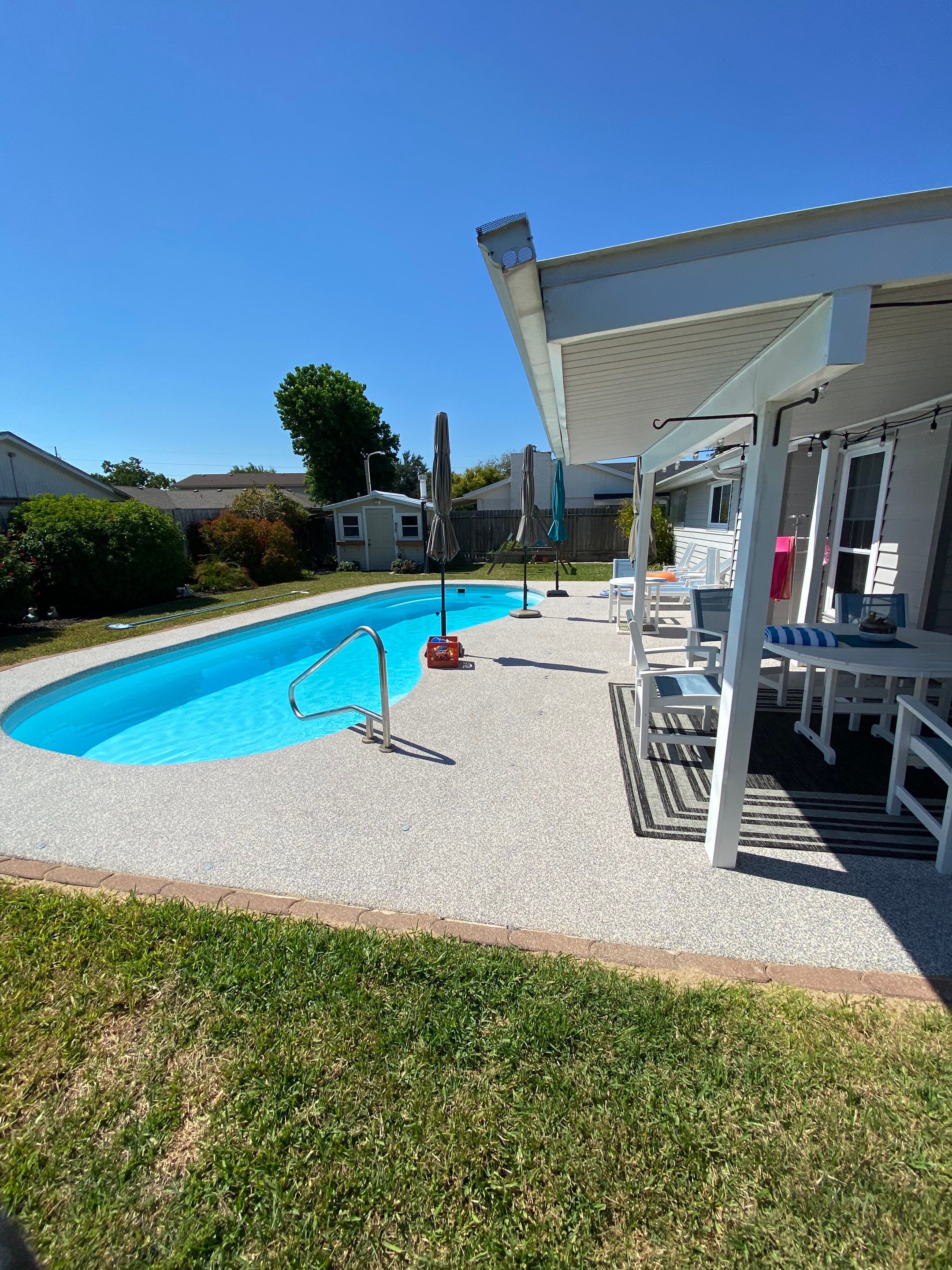
Fox installs a hand-troweled EPDM rubber and poly resin coating over existing concrete when the slab is sound. The texture is part of the surface itself, which helps create wet-foot grip without making the deck harsh to walk on.
Want to see whether your current deck can be resurfaced? Get a free, no-pressure quote.
Why Homeowners Choose Rubber Around the Pool
For many families, safety is what starts the search. Comfort is what closes it.
A rubber-based pool deck surface solves several problems at once:
- It is slip-resistant by texture. That matters most around splash zones, steps, and pool entry points.
- It runs cooler than concrete. Not cool at all times, but noticeably easier on bare feet in direct sun.
- It covers surface cracks and worn areas. You can improve the deck without automatically tearing out the slab.
- It feels more forgiving underfoot. Especially compared with old concrete or hard painted surfaces.
That combination is why pool-deck-first homeowners usually land here instead of on a basic coating. They want a surface that feels better to live with every day.
If you are still comparing materials, our breakdown of a Kool Deck alternative explains how rubber differs from more rigid pool-deck systems.
When Resurfacing Is Smarter Than Replacing the Deck
Many homeowners assume a slippery, cracked, or ugly pool deck needs to be demolished. Sometimes that is true, but not nearly as often as people think.
If the concrete base is still structurally sound, resurfacing is usually the better first conversation. It lets you keep the slab you already have and replace the part that is actually causing the problem: the worn, uncomfortable surface on top.
Resurfacing is often the right fit when your deck has:
- minor or moderate surface cracking
- faded or blotchy color
- flaking or pitted areas
- worn-down texture
- hot bare-foot traffic zones
- slick spots when wet
If the slab is heaving, sinking, or breaking apart in a major way, a good contractor should tell you resurfacing is not the honest fix. But when the structure is fine and the top layer is the issue, resurfacing usually gives homeowners the biggest improvement with less disruption.
For a broader look at how the system works over existing concrete, see our guide to pool deck resurfacing in Little Rock.
Why Fox Is a Good Fit for Arkansas Pool Decks
Pool decks are Fox's primary public offer, so this is not a side service for us.
We install hand-applied EPDM rubber and poly resin coatings built specifically for outdoor concrete surfaces. Every part of that spec ties back to a homeowner benefit:
- Hand-troweled application helps us control the surface across older decks and detailed pool edges.
- Heat-rolled finishing helps lock in texture and consistency.
- Rubber over existing concrete means no demolition when the slab is still sound.
- Cooler-than-concrete performance makes the deck more comfortable during pool season.
- Slip-resistant texture helps the space feel safer where people actually move fast.
- 12-year written warranty gives homeowners real protection after install.
Fox is Arkansas-licensed and insured, serving Arkansas and Greater Memphis. If you want to see finish options before you book an estimate, you can browse the available looks on our colors section and learn more about where the system fits on our services section.
Quick FAQ
What is the best slip-resistant pool deck surface?
The best answer depends on the condition of your slab and what you want the deck to do. For many Arkansas homeowners, a rubber-based surface stands out because it combines traction, cooler bare-foot comfort, and crack coverage without requiring full replacement.
Does slip-resistant mean rough on bare feet?
It should not. A good pool-deck surface needs grip, but it also needs to feel comfortable when adults and kids are walking barefoot. That balance is a big reason homeowners choose rubber instead of a harsher textured finish.
Will a slip-resistant pool deck surface stay cool?
No outdoor surface stays cool at all times in direct August sun, but a rubber pool deck can run cooler than plain concrete in the same conditions. That is a practical comfort difference most families notice quickly.
Can you resurface a slippery pool deck without tearing it out?
Often, yes. If the underlying concrete is sound, resurfacing can cover the worn top layer and give you a safer, more comfortable finish without demolition.
For another Central Arkansas perspective, compare Stamped Concrete vs Rubber Pool Deck: Better Outside with Best Pool Deck Surface for Arkansas Summers before choosing the surface approach that fits your property.
Free Estimate
Ready to resurface your pool deck?
See what a cooler-underfoot, slip-resistant pool deck could look like at your home.
Our 60/60/60 Sale is on: a $60 gift card, 60% off installation, and your install guaranteed within 60 days.
Get Your Free Pool Deck Quote →Free, no-pressure, and we'll call you within 5 minutes.