June 9, 2026 · Little Rock, AR
Driveway Resurfacing in Little Rock: Cover Cracks & Stains
A driveway that is cracked, oil-stained, and tire-marked is almost never broken below the surface. It is worn on top. And worn-on-top problems do not justify tearing out the slab.
That gap is where most homeowners overspend. The standard contractor answer in Central Arkansas is demolition — break it up, haul it off, pour new, and lose the use of your driveway for a week or more. For driveway resurfacing in Little Rock, replacement is usually the most expensive fix for the cheapest part of the problem. The concrete underneath is typically structurally sound. What failed is the top quarter-inch that takes the hot tires, the gas drips, the de-icer, and the freeze.
Resurfacing keeps the base you already paid for and bonds a new wear layer directly over it. No demo, no dumpster, no re-pour.
Why Driveways Crack and Stain Faster Than Any Other Slab
A driveway takes more abuse than a patio or a walkway, and it shows. Three forces do most of the damage, and each one lives in the surface — not the structure.
- Freeze-thaw cycling. Little Rock crosses the freezing line dozens of times each winter. Water wicks into hairline cracks and pores, freezes, expands about 9%, and pries the surface apart from the inside. Every cycle widens what was already there.
- Hot-tire pickup and oil. Tires come off summer pavement near 140°F and soften any cheap coating, lifting it on contact. Engine oil, transmission fluid, and gas seep into bare concrete's pores and stain it permanently. Bare slabs have no defense against either.
- De-icer and UV. Salt and ice-melt chemicals eat at the surface paste, while afternoon sun heats the slab, expands it, then lets it contract overnight. Years of that cycling cause spalling — the flaking and pitting you feel underfoot.
None of these require a new slab. They require a new surface that flexes and seals instead of fracturing and soaking.
Why Driveway Resurfacing in Little Rock Beats the Alternatives
It helps to line resurfacing up against what else a homeowner gets quoted. Every option solves the same problem with a different tradeoff.
- Full replacement — $15 to $30 per square foot, a one-to-two-week project, and you are paying to remove a base that was fine. It also re-cracks at the same joints in a few seasons, because the soil movement underneath never changed.
- Stamped overlay — handsome on day one, but it is a rigid cement product. It tracks the slab's movement and re-cracks at the joints, often within a couple of winters.
- Pavers — a sand-set system that shifts, settles, and sprouts weeds in the joints. It moves with the ground, which means it keeps moving — and under vehicle weight, it ruts.
- Epoxy or paint — cheap up front at $3 to $6 per square foot, but epoxy is brittle, not UV-stable outdoors, and the first thing to fail under hot tires. It chalks, yellows, and peels within one to three Arkansas summers.
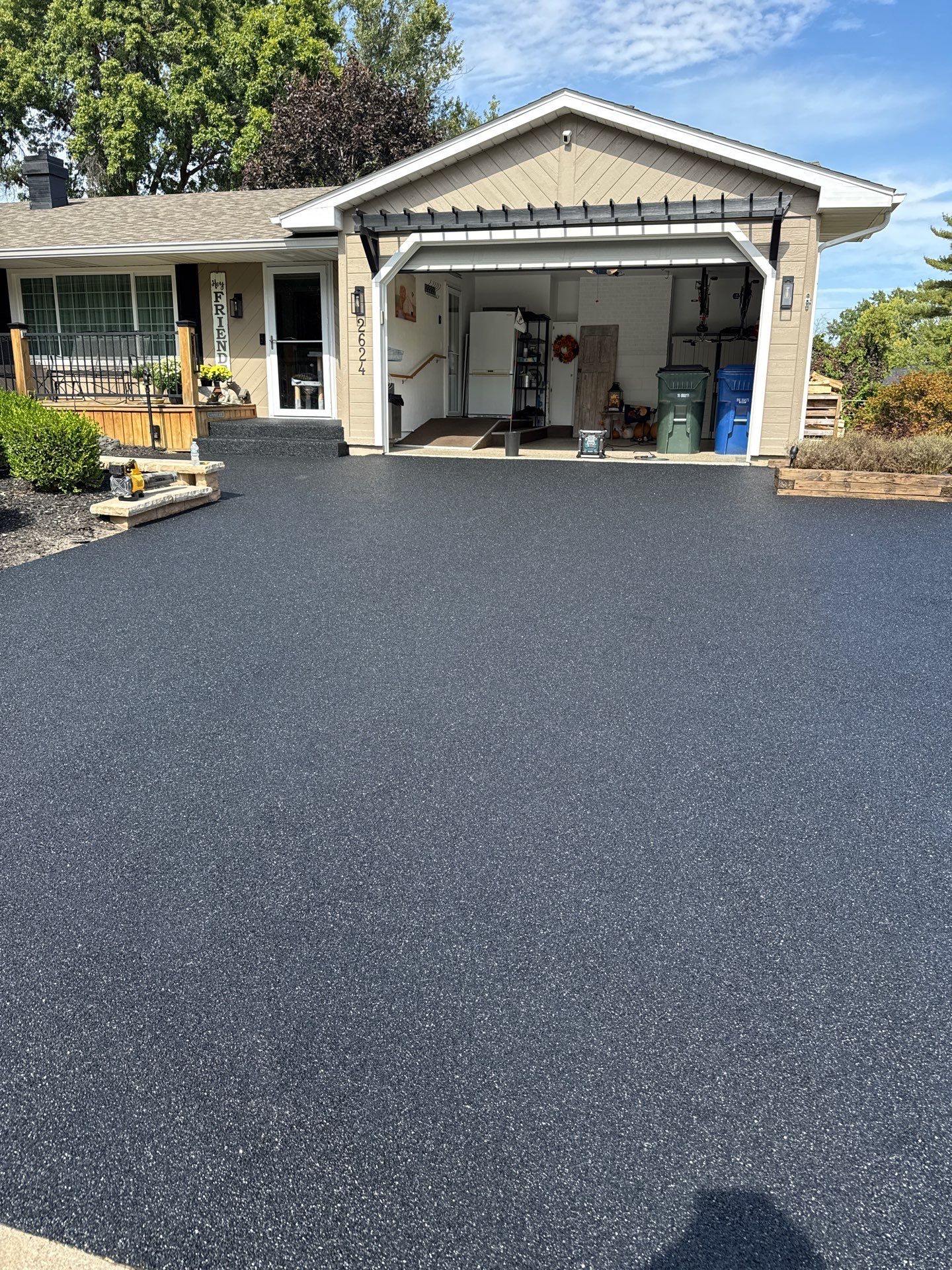
Fox is built differently on purpose. We install a hand-troweled coating of EPDM rubber granules bound in a poly resin, applied directly over your existing driveway. EPDM is the same rubber engineered for roofing membranes and playground surfaces — made to flex through temperature swings and shrug off UV and chemicals.
Because the finished layer is rubber-based, it moves with the slab instead of fighting it. The cracks that telegraph through rigid overlays get bridged and covered. We hand-trowel the material to a consistent thickness, then heat-roll it to lock the texture and set the bond. That texture is what makes it grip even when wet, and the sealed surface is what finally keeps oil and gas from staining your concrete — spills wipe up instead of soaking in.
See what your driveway could look like — get a free, no-pressure quote.
What the Process Actually Looks Like
Resurfacing a driveway is a craft process, not a cosmetic one. Here is the sequence we run on a Little Rock job.
We start with diagnosis. Before anything bonds, the slab gets inspected, cleaned, degreased, and profiled so the new layer has something to grip. Loose or spalling material is addressed, and any moving structural cracks get flagged honestly — if a driveway has real foundation movement, resurfacing is not the right call, and we will tell you that on site rather than coat over a problem.
Next comes the base and primer coat, keyed into the prepared concrete. Then the EPDM-and-resin wear layer goes down by hand, troweled to thickness, and heat-rolled into a seamless, continuous surface — no joints for water to attack, no seams for tires to lift.
Most driveways are finished in a single day. Larger or multi-car driveways may run two to three days, and we will give you a realistic window before we start. Either way, the slab never leaves your yard.
Why Homeowners Choose Fox
The credibility is in the specifications, not the sales pitch. Each one ties to a real benefit for your driveway.
- Hand-troweled and heat-rolled — not poured or spread. That hands-on control gives an even thickness and a reliable bond across an uneven, weathered slab.
- Stain-sealed and chemical-resistant — oil, gas, and de-icer wipe off instead of etching in, so the driveway stays looking new.
- UV-stable — it holds its color through Arkansas summers without the chalking that kills epoxy.
- Cooler than concrete — it runs cooler than a bare slab in the same sun. Cooler, not cold, and like any outdoor surface it still warms in direct sun.
- Slip-resistant by texture — the grip is built into the surface, not a topcoat that wears off.
- 12-year written warranty — covering peeling, bond failure, cracking, color stability, and slip resistance.
It also comes in a range of signature Fox color blends, so the driveway you keep does not have to look like the driveway you had — a clean, finished entry is the first thing a guest or a buyer sees. You can browse the full range on our colors page and see every surface we coat in our services section. Fox is a licensed and insured Arkansas contractor working across Little Rock and Central Arkansas.
Driveway Resurfacing FAQ
Can you really cover a cracked, stained driveway without replacing it?
Yes — that is exactly what the system is built for. The coating bonds directly over your existing concrete, covering cracks, oil stains, and surface spalling with no demolition and no re-pour. The only exception is a slab with active structural movement, which we identify during the on-site inspection.
Will it hold up to vehicles and hot tires?
Yes. The EPDM-and-resin layer is engineered to flex and stays put under vehicle weight and hot-tire contact — the exact failure point where cheap epoxy and paint lift. The sealed surface also keeps future oil and fuel drips from staining the concrete.
How long does a driveway take?
Most driveways are finished in a single day. Larger or multi-car driveways may take two to three days. We give you a realistic timeline before any work begins.
How do I maintain it?
Hose it off. The surface is UV-stable, sealed, and seamless, so there is no resealing or repainting — spills wipe up and routine cleaning keeps it looking new.
Free Estimate
Have an outdoor concrete project?
Pool decks are our specialty. We also consider driveway projects when the surface is a good fit.
Our 60/60/60 Sale is on: a $60 gift card, 60% off installation, and your install guaranteed within 60 days.
Request an Outdoor Concrete Quote →Free, no-pressure, and we'll call you within 5 minutes.