If spring patio project planning usually starts for you when the first warm Saturday hits, you're not alone. It's also the exact moment most homeowners realize their patio still looks cracked, faded, or rough underfoot from last year.
The problem is simple: by the time spring feels close, everyone else is calling too. Schedules tighten up, weather gets less predictable, and the patio project you wanted to enjoy in April starts sliding toward early summer.
Winter is the better window to think it through. You can choose the right fix, line up the timing, and go into spring with a real plan instead of reacting once the season is already here.
Why Waiting Until Spring Usually Creates a Worse Project
Most patio projects get delayed for the same three reasons.
First, homeowners wait until they can see every flaw clearly again. Once the backyard starts getting used, the cracks, stains, and worn spots become impossible to ignore. By then, you're not planning ahead. You're trying to solve a problem on the clock.
Second, spring weather in Arkansas is unreliable. You can have one beautiful week followed by rain, cool mornings, and shifting conditions that throw off an outdoor project schedule.
Third, people start with the wrong question. They ask, "What should we do with this patio?" when the better question is, "What result do we actually want by spring?"
Usually that result is some mix of:
- Cover the old cracks without tearing out the whole slab
- Make the surface safer when it gets wet
- Get something cooler than bare concrete in summer
- Upgrade the look before pool season, cookouts, and guests
If that's the goal, winter is the best time to map the job, not because work has to happen immediately, but because good spring patio project planning gives you better options.
Your Main Options for a Spring Patio Upgrade
If your patio is already solid but ugly, you usually do not need to demolish it. Most homeowners are choosing between a few realistic paths.
Option 1: Patch and paint
This is the quick fix people try when they want the patio to look better fast.
It rarely lasts. Patch material and paint do not solve the fact that the slab underneath is still cracked and exposed to Arkansas heat, rain, and movement. The old flaws tend to show back up, and the patio ends up looking tired again sooner than you hoped.
Option 2: Tear out and replace the concrete
This can make sense if the slab is truly failing. But if the patio is structurally sound, replacement is usually the most disruptive path. It means demolition, hauling debris away, more mess in the yard, and a longer process just to get back to a basic concrete surface.
Option 3: Resurface over the existing concrete
For a lot of patios, this is the sweet spot.
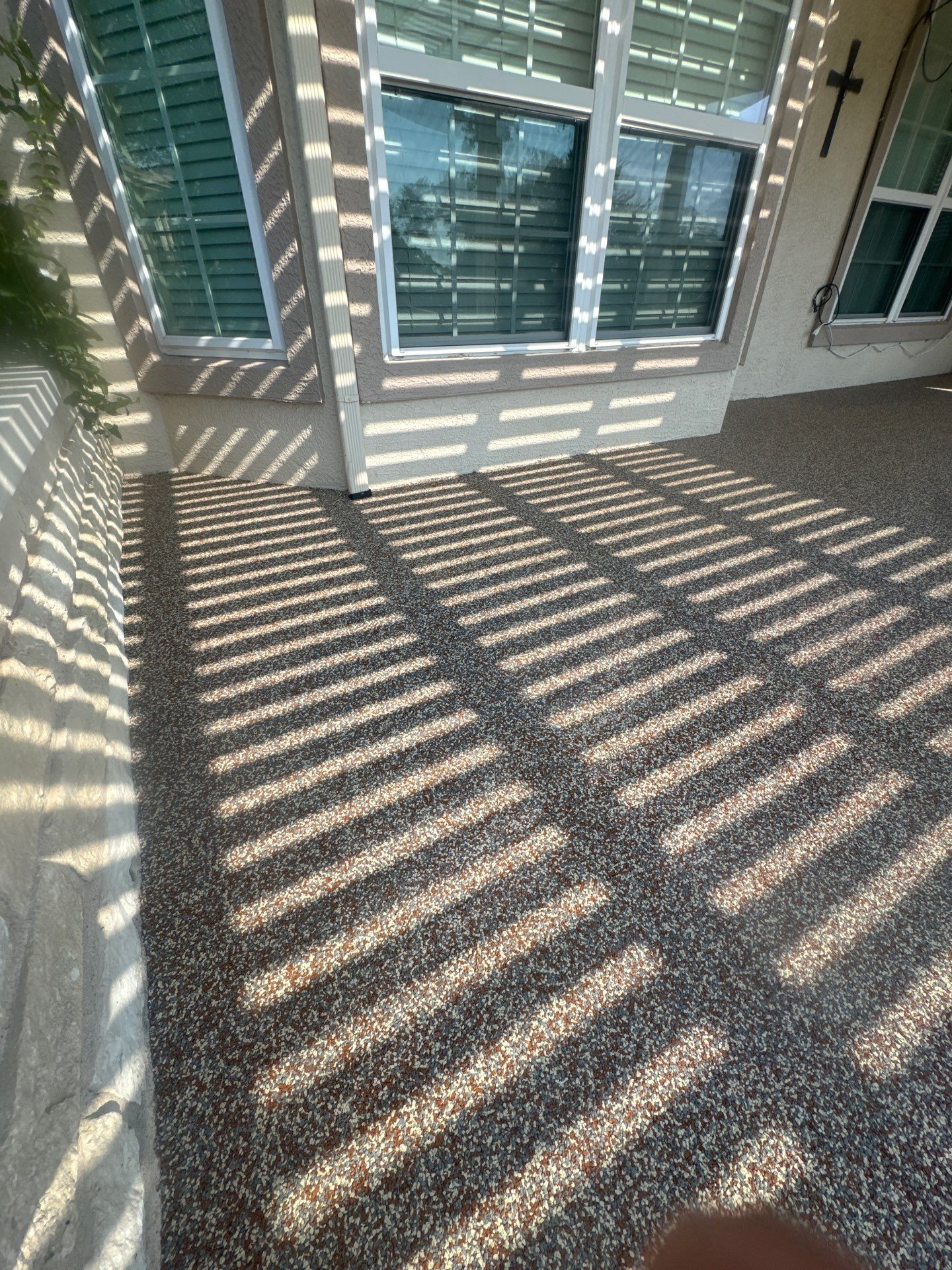
Instead of ripping everything out, we install a hand-troweled EPDM rubber and poly resin surface over the concrete that's already there. That lets us cover normal surface cracking, refresh the look, and give the patio a slip-resistant finish without turning the whole backyard into a construction zone.
That matters when you're trying to be ready for spring instead of spending spring in the middle of a project.
See what your patio could look like by spring season kickoff. Get a free, no-pressure quote.
Why Spring Patio Project Planning Favors Resurfacing
If your slab is still sound, resurfacing solves the problems that usually matter most to a homeowner.
You keep the concrete you already have. That means no demolition and far less disruption.
You get a surface that hides the worn-out look of the old patio instead of forcing you to stare at repaired crack lines. And because the system is rubber-based, it is more forgiving than a rigid topcoat when your patio deals with normal seasonal movement.
You also get a better backyard experience when the weather heats up. A resurfaced rubber patio is cooler than concrete in the same sun, more forgiving under bare feet, and easier to enjoy during the months you actually want to be outside.
Winter planning also gives you time to think through the details that people rush past in spring:
- Do you want to simply cover cracks, or do you want the patio to feel better underfoot too?
- Do you need a safer surface for kids, dogs, or grandparents when the patio is wet?
- Do you want the patio color to work with the rest of the backyard? You can preview our color options before the job is on the calendar.
- Are you trying to finish before a party, pool opening, or a stretch of regular weekend use?
The more clearly those answers are set ahead of time, the smoother the project goes.
Why Homeowners Call Fox for Patio Resurfacing
We are not putting down a thin cosmetic layer and hoping for the best. Fox installs a hand-applied, heat-rolled rubber surface designed for outdoor concrete that already exists.
That matters because each spec connects to something you actually feel:
- Covers cracks without demolition so you are not starting over from bare dirt
- Slip-resistant texture that gives better footing when the patio is wet
- Cooler than concrete in direct sun, which makes spring and summer use more comfortable
- Usually done in a day for many patio projects, so the yard is not tied up for a week
- Built to last 15+ years with a 12-year written warranty
- Arkansas-licensed and insured, serving Arkansas and Greater Memphis so you are dealing with a real local company
If you want to see where patio resurfacing fits compared with other surfaces we install over, our services page is the fastest overview.
We also keep the conversation practical. If a slab has major structural failure, resurfacing is not the honest answer. But if the patio is sound and just looks bad, winter planning usually points homeowners toward resurfacing because it gives them a new surface without the headache of a full tear-out.
Quick FAQ
When should you start planning a spring patio project?
Winter is ideal. You have more room to think through the finish, timing, and scope before spring demand picks up.
Do you have to replace cracked concrete first?
Not usually. If the patio is structurally sound, we can often resurface right over it and cover normal surface cracking without demolition.
Will a resurfaced patio feel cool at all times?
No. The honest pitch is that it is cooler than concrete, not cool at all times. In direct Arkansas sun it will still warm up, but it is typically more comfortable than bare concrete.
How long does patio resurfacing take?
Many patio jobs are completed in about a day, which is one reason spring patio project planning works so well when you start before the rush.
For another Central Arkansas perspective, compare Pool Deck Resurfacing Bryant AR: Cooler, Safer Decks with Pool Deck Resurfacing Conway AR: Cooler, Safer Decks before choosing the surface approach that fits your property.
Free Estimate
Have an outdoor concrete project?
Pool decks are our specialty. We also consider patio projects when the surface is a good fit.
Get 15% off or 12 months no interest*. Fall offer ends 12/19/26.
Request an Outdoor Concrete Quote →Free, no-pressure, and we'll call you within 5 minutes.